RAPTER
All-in-One Data Collection Platform
Overview
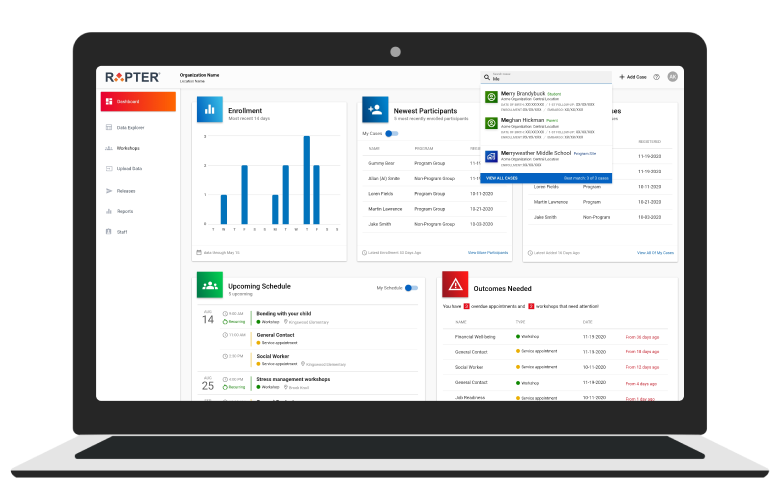
RAPTER unified fragmented workflows such as participant intake, random assignment, tracking, and reporting into a single integrated systems product. From a lean MVP and through later releases and product framework suite integration, I led system design, interaction patterns, and accessibility, and created a lightweight design system that reduced engineering rework.
Client

Role & Duration
2023-2025
The Problem
Project‑by‑project tools were slow and inconsistently developed, creating friction, development delays and data quality risks. Each time a data gathering and participant tracking project was initiated, a separate one-off system was developed in silo, highlighting inefficiencies user experience challenges.
Mathematica started their own data products initiative with a flexible web-based system for Random Assignment, Participant Tracking or RAPTER for short. They needed the new system to be reusable, secure, and simple enough for non‑technical users while meeting compliance and privacy requirements. The system started with a clean slate but also required continuous business and user input to create and maintain an intuitive and comprehensive system.
Role & Process
I ran product feature workshops, interviews, and usability tests with pilot users. I designed wireflows, prototypes, and component specs, and partnered with engineering and QA to balance scope, security, and usability. We instrumented key screens to observe task paths and fed the learnings back into the roadmap.
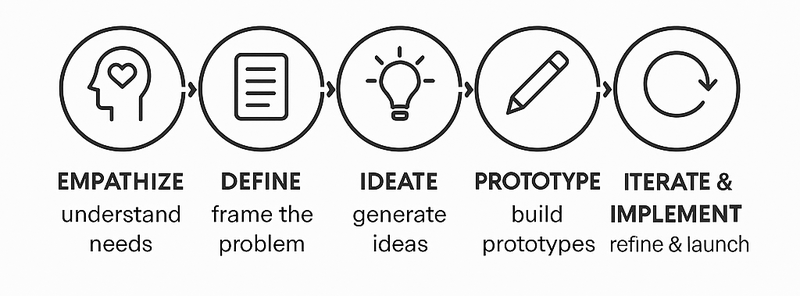
RAPTER user-centered design process followed during the agile development process.
MVP Build
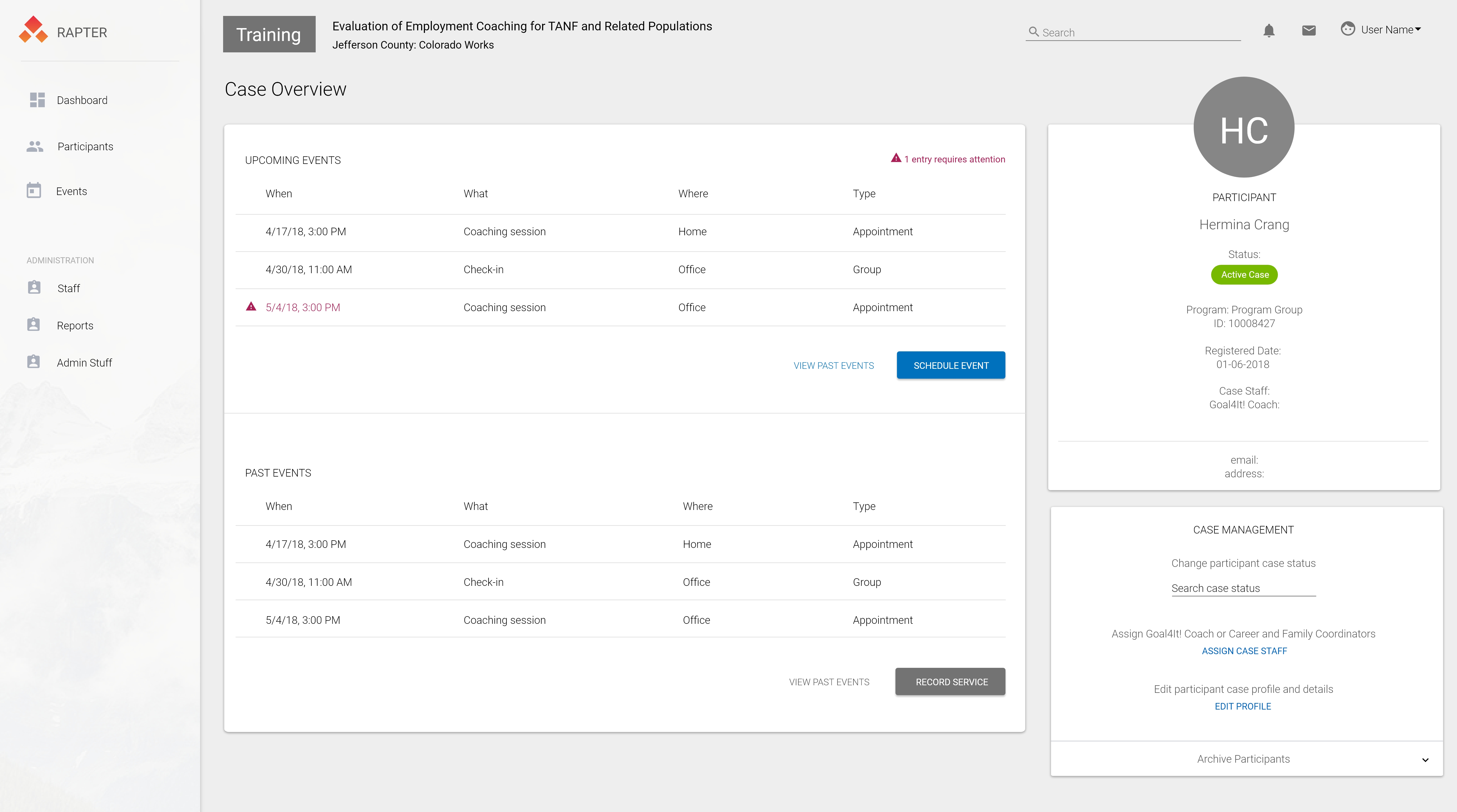
We shipped a focused MVP that validated the core functions: intake, participant profiles, centralized randomization, and basic reporting. The MVP proved that a single platform could serve multiple projects but also revealed key usability issues, for example dense forms, inconsistent UI, and limited keyboard access, which informed the next product iteration’s priorities.
Outcomes
- Replaced project-specific and dense systems with a single reusable platform.
- Validated participant workflow assumptions with pilot sites and surfaced prioritized improvements.
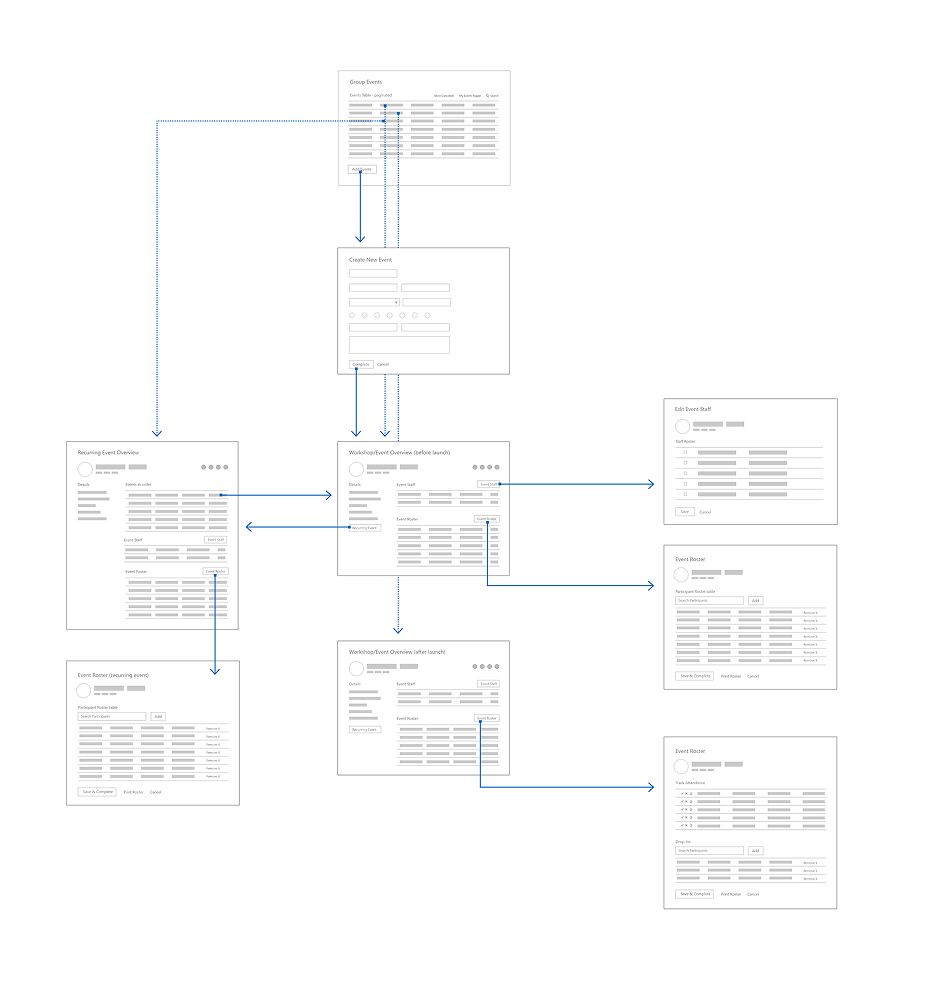
RAPTER early stage case overview wireframe
Usability Testing Insights
Research combined workshops, interviews, and usability tests with project partners. Findings showed global search and simplified navigation were critical for efficiency. Accessibility remained essential, with users stressing the need for contrast, keyboard navigation, and screen-reader support. Inconsistent visuals in earlier systems slowed decisions, but RAPTER’s consistent UI and new dashboard increased confidence, with participants noting tasks were “easier to find and complete.”
test results
24
Tests
93%
Success Rate
86sec
Time on Task
4.29
Avg. SUS
At first, people expected datasets rather than guidance, so we lifted explanatory copy and added a Get Started path. Users needed obvious starting points; once labels were clear, the horizontal menus and sidebar kept them oriented and confident.

“Right now, everything is great! It’s really easy to find everything. I like how it’s got everything on one screen, instead of having to go to different locations.”
– Case Worker

“I need easy-breezy reports. OK, did I miss someone? Is someone working? It’s just me managing all the people in this program.”
– Program Manager / Grant Coordinator

“Oh. I like the Upcoming Events! I do have some come in for Workshops. Right now what I do is using my email tasks and their names and the dates that they are supposed to be here! This update is awesome! I really like that.”
– Outreach Specialist
Systems Thinking
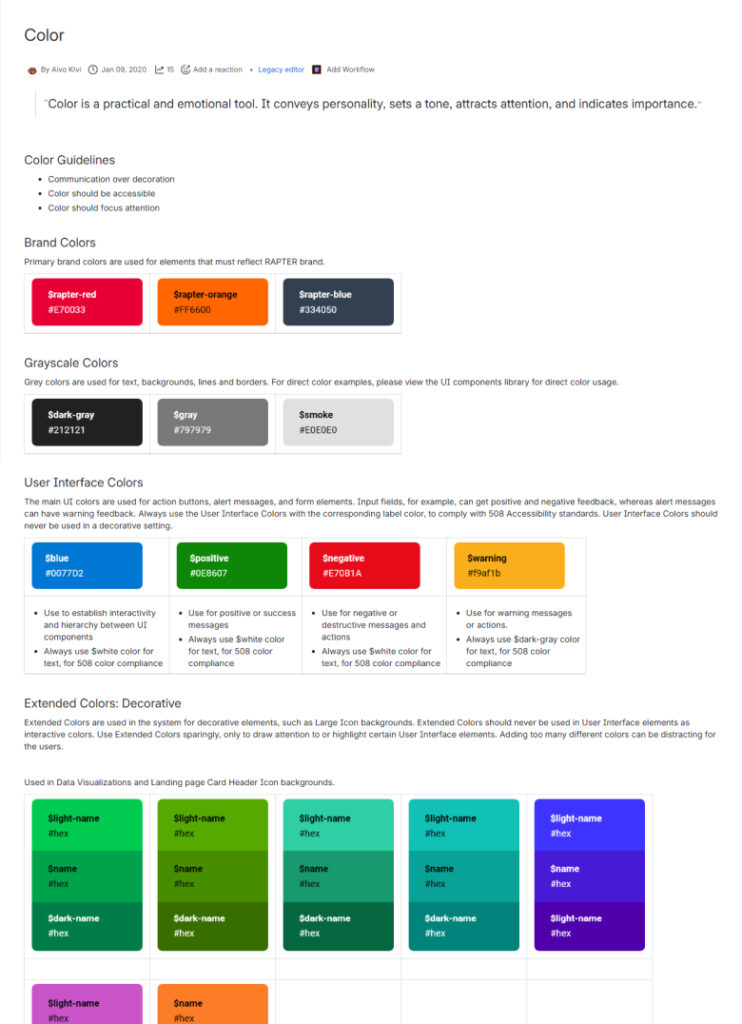
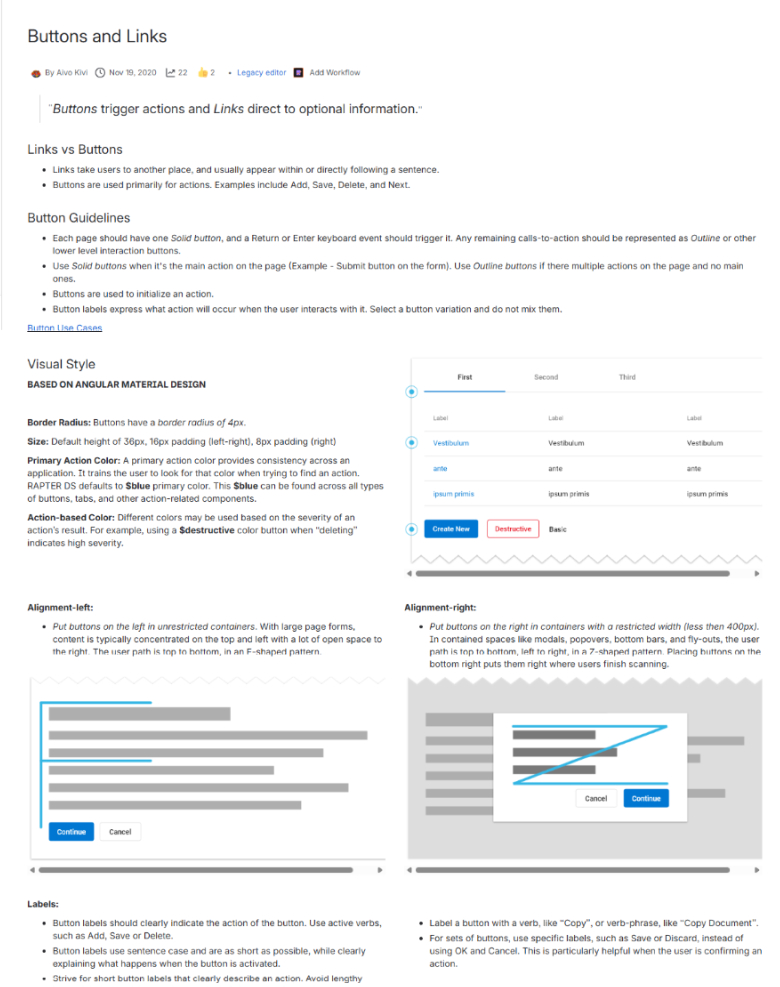
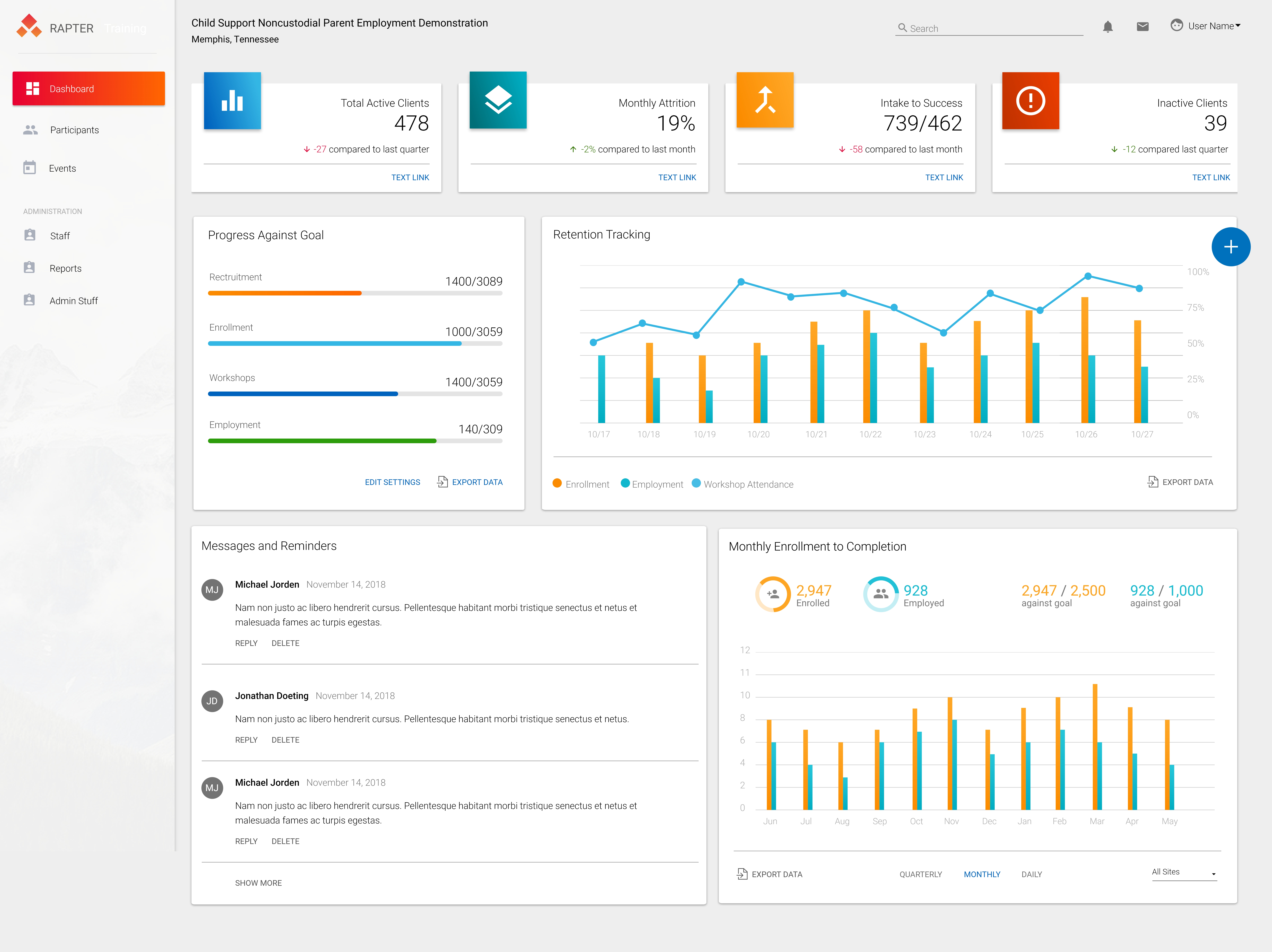
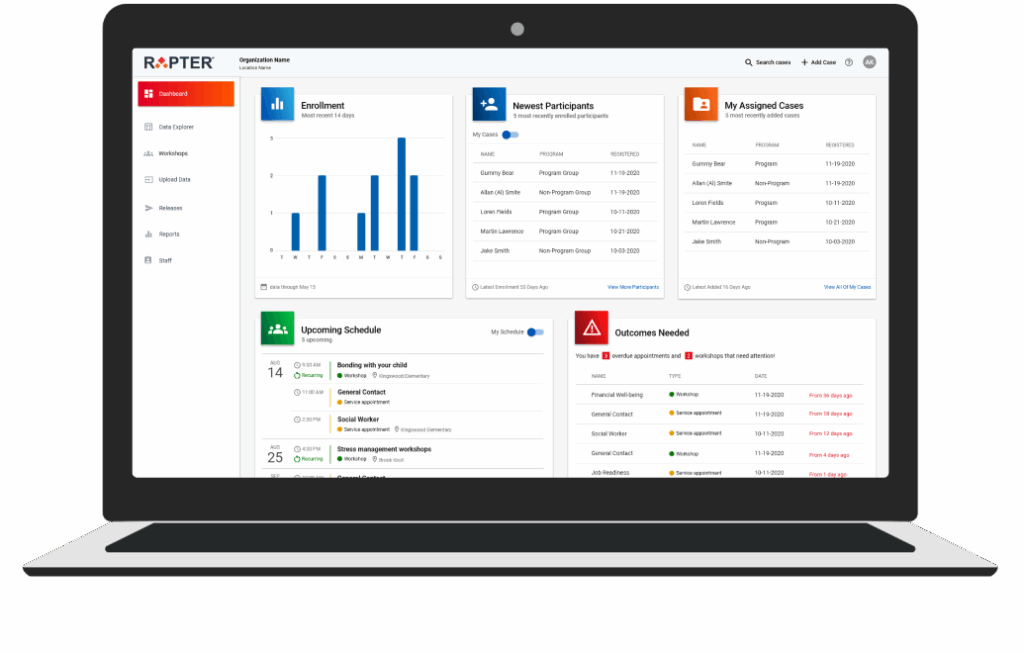
The next phase concentrated on improving usability, consistency, and accessibility. A lightweight design system was created, introducing standardized tokens, button styles, table patterns, and card components. Global search and a redesigned dashboard were introduced, allowing users to locate cases more quickly and complete tasks with fewer steps.
Impact
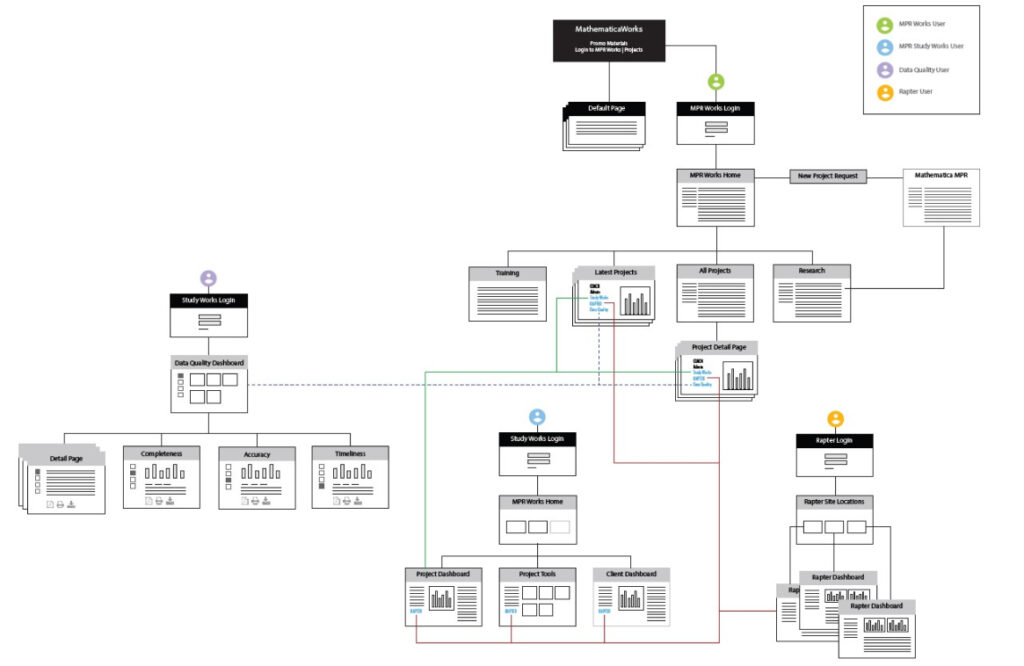
- Navigation clarified through a new sitemap and wireflows
- User efficiency improved with dashboard summaries and search
- Design-system adoption reduced rework for engineering by ~34%
“RED” – RAPTER Design System
Design system developed 2020-2021, in collaboration with the development team leadership.
Updated RAPTER Dashboard design
Enterprise Integration
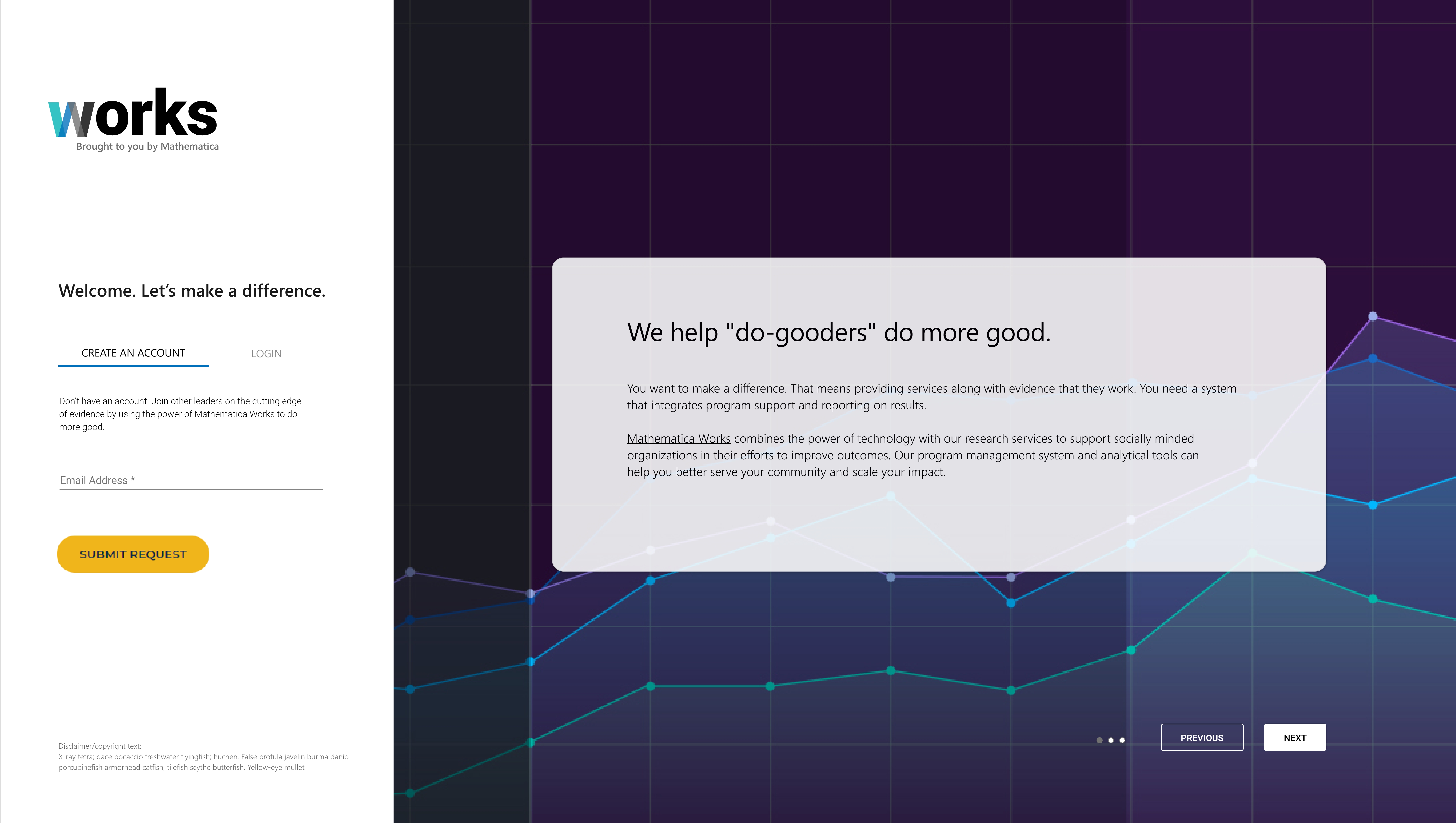
As the RAPTER product matured, it was integrated into mpr.Works, an enterprise suite of research tools. This required harmonizing interaction patterns, shared navigation, and a consistent design language across applications. Collaboration across product teams ensured interoperability and scalability.
Impact
- Defined product relationships and entry points in the ecosystem
- Established accessibility and QA standards for the suite
- Supported governance of reusable design components
.works login page for the system
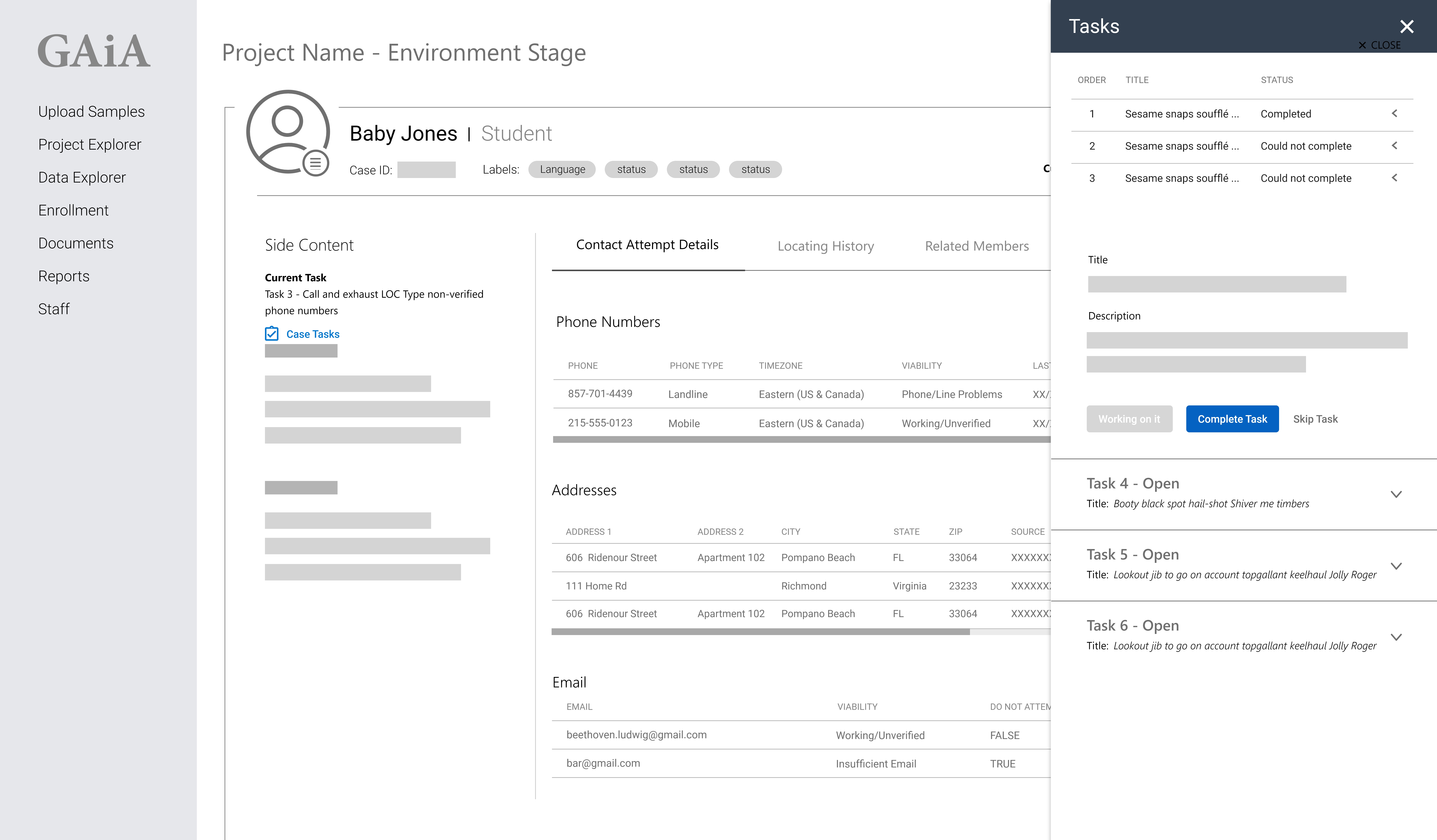
Dynamic Tasks panel feature wireframe
Final Solution
We shipped a focused MVP that validated the core functions: intake, participant profiles, centralized randomization, and basic reporting. The MVP proved that a single platform could serve multiple projects but also revealed key usability issues, for example dense forms, inconsistent UI, and limited keyboard access, which informed the next product iteration’s priorities.
Outcomes
- Replaced project-specific and dense systems with a single reusable platform.
- Validated participant workflow assumptions with pilot sites and surfaced prioritized improvements.
Final rapter dashboard
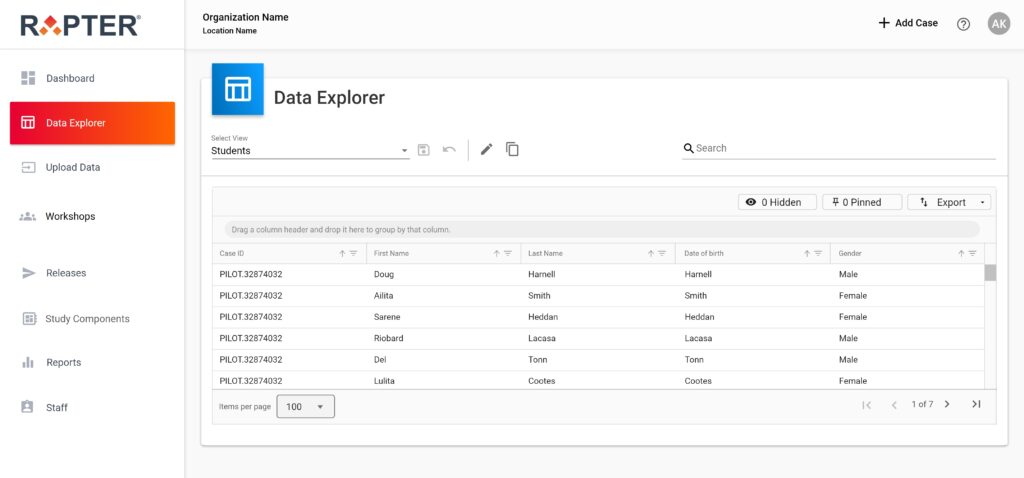
Dynamic data explorer
Each filtered view can be saved by users, and shared with others
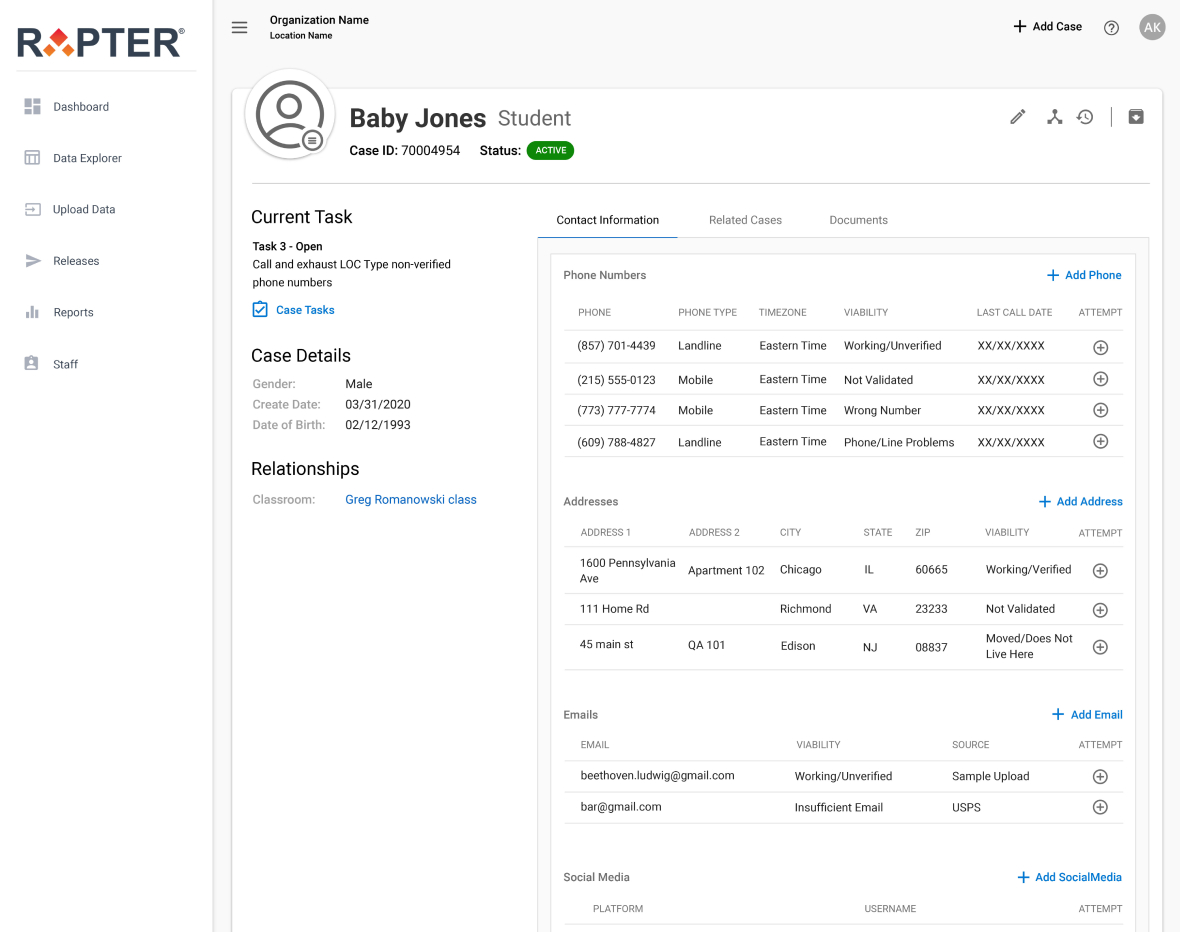
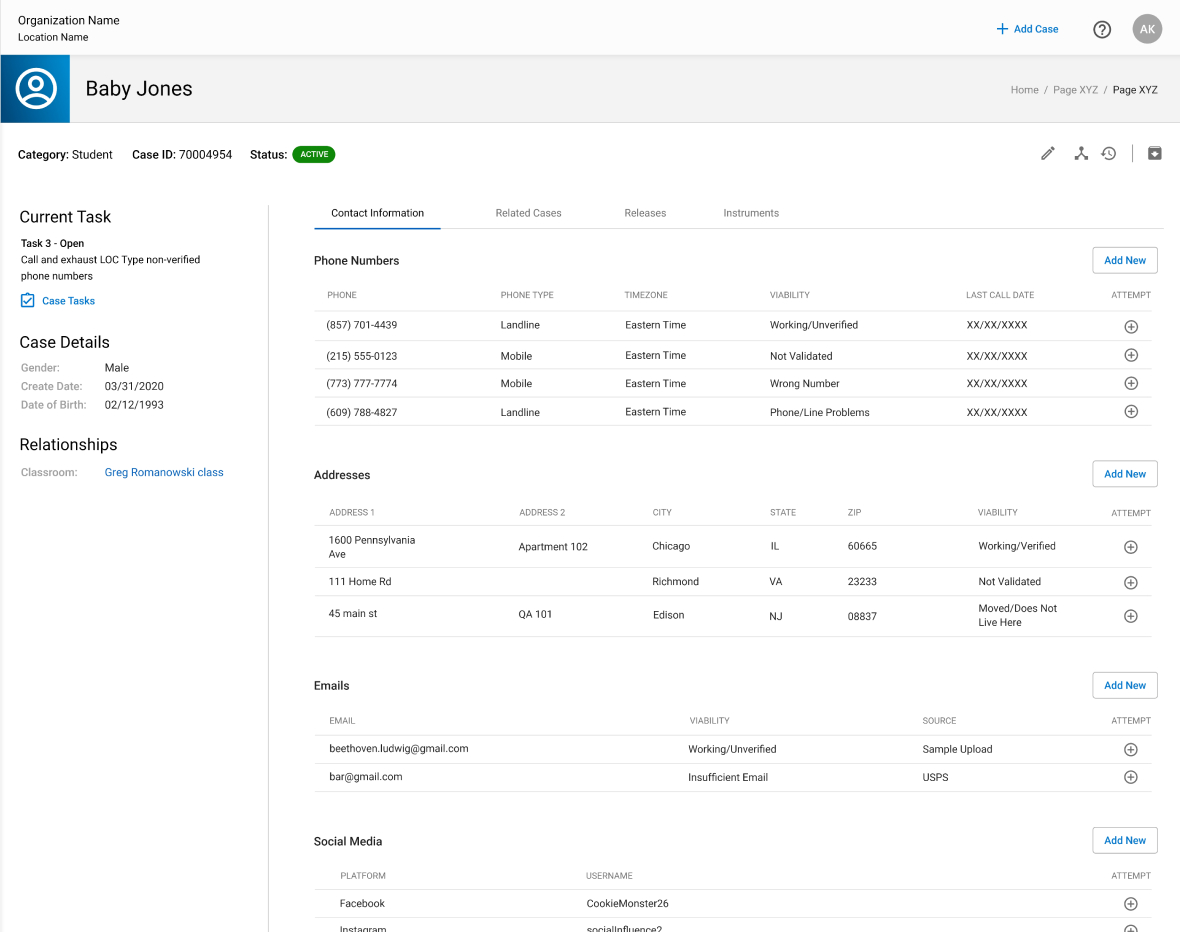
Case study page progression wireframe/mockup
Project Learnings
Early IA and wireflows aligned stakeholders. A pragmatic design system reduced rework. Phased rollouts of advanced features kept users from being overwhelmed. Next: embed analytics to quantify time‑on‑task gains and expand the component library into Storybook for cross‑team reuse.

Let’s Connect
Feel free to reach out for collaborations or just a friendly hello